
Pelvic Floor Exercises for Prolapse After Delivery: Causes, Symptoms & Kegel Guide
By Teddyy Editorial Team | Last Updated: April 28, 2026
Pelvic floor exercises are essential after delivery — but if you’re experiencing pain, pressure, or a bulge “down there,” you may be dealing with something beyond normal postpartum recovery. This guide explains what pelvic organ prolapse is, why it happens after childbirth, and how targeted pelvic floor exercises can help prevent it from getting worse.
“I couldn’t understand why there was so much pain. It especially hurt while being intimate with my husband… you know? I felt a little bulge… down there, but I thought my body has changed so much after giving birth, and I was busy fussing over Rohit’s diaper rashes, so I didn’t pay attention to it,” says Radhika who gave birth to a baby boy just a few months ago.
What Radhika didn’t realise was that she was suffering from a pelvic organ prolapse after delivery. What looked like a little bulge would soon turn into a painful protruding of an internal organ. She might have been able to improve her condition by starting pelvic floor exercises early.
If you are looking for a step-by-step Kegel exercise program for general postpartum recovery, see our complete guide: Kegel Exercises: 5 Proven Steps for Recovery After Giving Birth.
Pelvic Organ Prolapse?
Pelvic organ prolapse (POP) occurs when the muscles and tissues supporting the pelvic organs become weakened or torn, allowing one or more organs to drop from their normal position into or through the vagina. It is one of the most common — and most underreported — complications of pregnancy and childbirth.
“Prolapse” simply means a descending or drooping of organs. The pelvic organs that can be affected include:
- Bladder (cystocele — the most common type)
- Uterus (uterine prolapse)
- Rectum (rectocele)
- Small bowel (enterocele)
- Vaginal vault (after hysterectomy)
Many women experience mild prolapse after delivery without realising it. Symptoms can range from a feeling of heaviness or pressure in the pelvis, to a visible or palpable bulge at the vaginal opening, lower back pain, or difficulty with bladder and bowel control.
What Causes Pelvic Organ Prolapse After Delivery?
The growing fetus places enormous pressure on the pelvic floor muscles and connective tissues throughout pregnancy. Vaginal delivery — especially a long or difficult labour, a large baby, use of forceps or ventouse, or multiple pregnancies — significantly increases the risk of pelvic floor damage.
However, prolapse is not limited to those who had vaginal deliveries. Other contributing factors include:
- Genetics — some women naturally have weaker connective tissue
- Being overweight or obese, which increases abdominal pressure
- Chronic constipation and straining
- Chronic cough (e.g., from asthma or smoking)
- Previous pelvic surgery, including hysterectomy
- Hormonal changes during menopause that weaken tissue
Understanding your risk factors is the first step toward protecting your pelvic floor.
Why Your Pelvic Floor Muscles Matter
Think of the pelvic floor as a hammock of muscles and tissues stretched between your tailbone and pubic bone. This hammock supports your bladder, uterus, and rectum. When the fibres of this hammock are weakened or torn, the organs it supports can shift downward.
A strong pelvic floor:
- Holds your pelvic organs in their correct position
- Controls the release of urine, gas, and stool
- Supports your spine and improves posture
- Contributes to sexual sensation and comfort
- Speeds postpartum recovery after vaginal and C-section delivery
Strengthening these muscles through regular exercise is the single most effective non-surgical intervention for mild-to-moderate prolapse.
How to Identify Your Pelvic Floor Muscles
Before you can strengthen your pelvic floor, you need to know where it is. The next time you are urinating, stop mid-flow. The muscles you tightened to do this are your pelvic floor muscles.
Do this identification exercise only once — repeatedly stopping urine mid-flow is not recommended as a regular practice. If you are still unsure, a pelvic floor physiotherapist can confirm correct muscle identification with a brief examination.
Important: If you have been diagnosed with grade 3 or 4 prolapse, or if you feel pain during any exercise, consult your gynaecologist or pelvic floor physiotherapist before starting a home exercise program.
Pelvic Floor Exercises for Prolapse: What to Do and What to Avoid
Exercises That Help (Safe for Mild-to-Moderate Prolapse)
1. Basic Kegel (Pelvic Floor Contraction)
The foundation of all pelvic floor rehabilitation.
- Empty your bladder before starting
- Sit, lie, or stand comfortably
- Squeeze and lift your pelvic floor muscles as if stopping the flow of urine
- Hold for 3–5 seconds; breathe normally throughout
- Fully release for 3–5 seconds
- Repeat 10 times — this is one set
- Aim for 3 sets per day
Only your pelvic floor should be working. Your buttocks, thighs, and abdomen should remain relaxed.
2. Quick-Flick Kegels (for Stress Incontinence)
These target the fast-twitch fibres that respond reflexively when you cough, sneeze, or laugh.
- Contract and release the pelvic floor rapidly — squeeze for 1 second, release for 1 second
- Perform 10 quick contractions in a row
- Rest for 30 seconds, then repeat for 3 sets
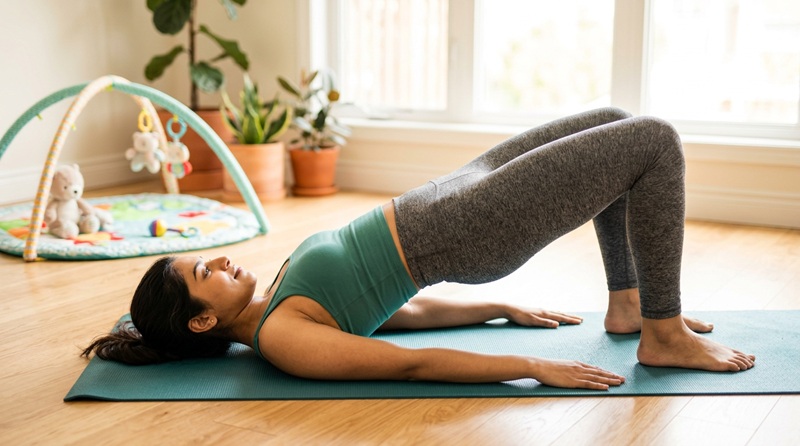
3. Pelvic Bridge (with Kegel)
Combines pelvic floor activation with gentle glute strengthening — safe for most postpartum women.
- Lie on your back, knees bent, feet flat on the floor
- Engage your pelvic floor, then slowly raise your hips toward the ceiling
- Hold at the top for 3–5 seconds while maintaining the contraction
- Lower slowly; release the pelvic floor at the bottom
- Repeat 10 times
Exercises to Avoid If You Have Prolapse Symptoms
High-impact and heavy-loading exercises increase intra-abdominal pressure and can worsen prolapse symptoms, particularly in the early postpartum period:
- Running and jumping (until pelvic floor strength is confirmed)
- Heavy weightlifting, especially squats and deadlifts with significant load
- Traditional sit-ups and crunches
- High-intensity interval training (HIIT) involving jumping
- Bearing down or breath-holding during any exercise (Valsalva manoeuvre)
Prolapse Recovery: A Realistic Timeline
- 24–48 hours after vaginal delivery: Gentle Kegel squeezes can begin even at this stage to restore blood flow and awareness. Keep holds to 2–3 seconds initially.
- Weeks 1–6: Focus on basic Kegels 3× daily. Avoid lifting anything heavier than your baby. Add quick-flick exercises at week 2–3.
- 6-week check: Get a postnatal check from your doctor or midwife. Request a pelvic floor assessment if you have any symptoms of prolapse.
- 6–12 weeks: If symptom-free and strength is improving, introduce pelvic bridge exercises and light walking.
- 3–6 months: Most women see significant improvement in bladder control and pelvic floor strength with consistent daily practice.
When to See a Pelvic Floor Physiotherapist
You should seek a referral to a pelvic floor physiotherapist if you experience any of the following:
- A visible or palpable bulge at the vaginal opening
- Leaking urine when you cough, sneeze, laugh, or exercise
- A persistent feeling of heaviness, pressure, or “something falling out”
- Pain or discomfort during intercourse after the postnatal period
- Difficulty fully emptying your bladder or bowel
- No improvement after 4–6 weeks of daily pelvic floor exercises
A pelvic floor physiotherapist can confirm correct exercise technique, assess prolapse grade, and design an individualised rehabilitation program. In India, pelvic floor physiotherapy is available in most large cities through women’s health clinics and postpartum care centres.
Related Articles on Postpartum Recovery
- Kegel Exercises: 5 Proven Steps for Recovery After Giving Birth — step-by-step daily program for general postpartum Kegel training
- Taking Care of Yourself After Birth
- Self-Care Tips for New Mums
- Postpartum Depression: Signs and Support
References & Sources
- American College of Obstetricians and Gynecologists (ACOG). Pelvic Organ Prolapse. acog.org
- National Institute for Health and Care Excellence (NICE). Urinary Incontinence and Pelvic Organ Prolapse in Women: Management. nice.org.uk
- Bø, K., et al. (2015). Evidence-Based Physical Therapy for the Pelvic Floor. Elsevier.
- World Health Organization (WHO). Maternal and Newborn Health. who.int
- Indian Council of Medical Research (ICMR). National Guidelines for Maternal Care. icmr.gov.in
Frequently Asked Questions: Pelvic Floor Exercises for Prolapse
Can pelvic floor exercises cure pelvic organ prolapse?
Pelvic floor exercises cannot reverse structural prolapse, but they are the most effective non-surgical treatment for mild-to-moderate cases. Consistent Kegel practice strengthens the muscles that support prolapsed organs, reduces symptoms such as heaviness and leaking, and can prevent the prolapse from worsening. For grade 3 or 4 prolapse, a pelvic floor physiotherapist or gynaecologist should be consulted.
When should I start pelvic floor exercises after a vaginal delivery?
You can begin gentle Kegel squeezes as early as 24 to 48 hours after a vaginal delivery, even while still in hospital. Start with short 2–3 second holds to restore blood flow and muscle awareness. If you had an episiotomy, tearing, or stitches, the contractions will not damage the repair — in fact, gentle activation promotes healing. Always check with your midwife or doctor if you are unsure.
Are pelvic floor exercises safe after a C-section?
Yes. Kegel exercises do not put any pressure on your abdominal incision, so they are safe to begin within a few days of a C-section. The pelvic floor still undergoes significant stress during pregnancy regardless of delivery method, so recovery exercises are recommended for C-section mothers too. Avoid any exercise involving abdominal strain until your surgical wound has healed.
How do I know if I am doing Kegel exercises correctly?
You should feel a squeeze-and-lift sensation inside your pelvis — as if you are stopping the flow of urine and lifting the pelvic floor upward. Your buttocks, thighs, and abdomen should remain completely relaxed. If you feel your stomach tensing, you are bearing down rather than lifting. A pelvic floor physiotherapist can confirm correct technique in a single appointment using simple assessment methods.
What exercises should I avoid if I have pelvic organ prolapse?
Avoid high-impact activities (running, jumping, HIIT) and heavy lifting until your pelvic floor strength is confirmed by a healthcare professional. Traditional sit-ups, crunches, and any exercise that involves breath-holding or bearing down (the Valsalva manoeuvre) should also be avoided, as they increase intra-abdominal pressure and can worsen prolapse symptoms.
How long does it take for pelvic floor exercises to improve prolapse symptoms?
Most women notice an improvement in symptoms — reduced heaviness, better bladder control — within 4 to 6 weeks of consistent daily practice (3 sets of 10 repetitions per day). Significant structural improvement can take 3 to 6 months. If there is no improvement after 6 weeks, consult a pelvic floor physiotherapist for an individualised program.