
Guide to the Best Sleeping Positions During Pregnancy
By Teddyy Editorial Team | Last Updated: April 23, 2026
Key Takeaways
- Tossing and turning throughout the night to find the right pregnancy sleeping positions? Does it feel almost impossible to get comfortable in bed as your pregnancy progresses?.
- Choosing between sleeping on your left or right side during pregnancy can feel confusing.
- When you’re pregnant, finding the right sleeping position can be tricky, especially as your belly grows.
- Finding a comfortable sleeping position during pregnancy can be a challenge, but here’s what usually works:.
- Getting a good night’s sleep during pregnancy isn’t always easy, but here are some tips to help you.
Best Sleeping Position During Pregnancy
Tossing and turning throughout the night to find the right pregnancy sleeping positions? Does it feel almost impossible to get comfortable in bed as your pregnancy progresses?
It does get tiring! As your body changes and your baby grows, finding the right sleep position can feel like a nightly challenge. Ultimately, your worry to ensure that you don’t cause any harm to your baby takes over, doesn’t it?
Don’t worry! We’re here to help you understand the best sleeping position in pregnancy and how wrong sleeping positions during pregnancy can harm your baby. This way, you will know how to comfortably switch your sleeping positions without worrying too much.
Sleeping on the Left vs. Right Side During Pregnancy
Choosing between sleeping on your left or right side during pregnancy can feel confusing. Here’s what you need to know about sleeping on each of these sides and making the best choice.
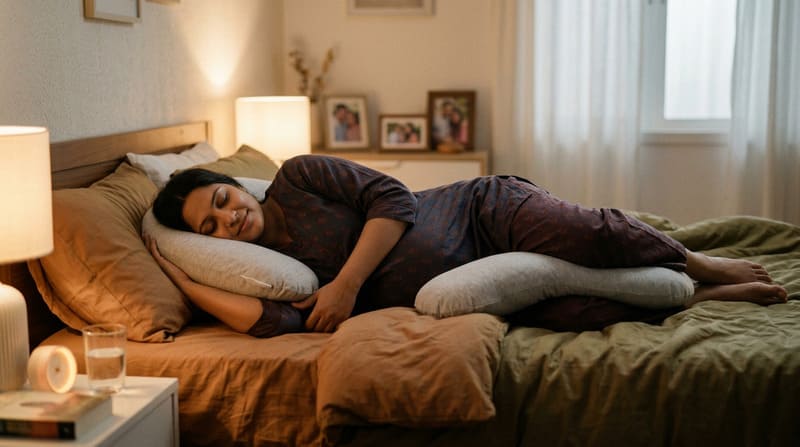
- Left Side: This is often recommended because it optimises blood flow to your baby and helps your kidneys do their job, reducing swelling in your legs and feet. It can also ease pressure on your liver.
- Right Side: Sleeping on your right side is fine too! While the left side might have a slight edge for circulation, the right side is still safe and comfortable, especially if you’re alternating positions.
You can switch between the two, depending on what feels best at that moment. The key is to listen to your body and find what makes you most comfortable.
Sleeping Positions to Avoid During Pregnancy
When you’re pregnant, finding the right sleeping position can be tricky, especially as your belly grows. Here are a few wrong sleeping positions during pregnancy you might want to avoid:
- Sleeping on Your Back: After the first trimester, this position can cause your uterus to press on your spine and major blood vessels, leading to dizziness, backaches, and reduced blood flow to your baby.
- Sleeping on Your Stomach: As your bump grows, this position becomes uncomfortable and impractical. Your belly will make it nearly impossible to lie flat, and it can also add unnecessary pressure on your growing baby.
It’s all about finding what’s most comfortable for you, so don’t stress if it takes a little time to figure out. Your body will guide you.
How to Find a Comfortable Position
Finding a comfortable sleeping position during pregnancy can be a challenge, but here’s what usually works:
- Pillows are Your Best Friends: Try placing a pillow between your knees to align your hips, under your belly for extra support, and behind your back to prevent rolling onto your back.
- Experiment with Positions: Sleeping on your left side is ideal, but if that’s not comfortable, try the right side. It’s okay to switch sides during the night.
- Elevate Your Upper Body: If heartburn is keeping you up, prop yourself up slightly with an extra pillow or two.
It usually takes a while to find what works best for you, so be patient with yourself. Comfort is key!
Sleep Better During Pregnancy
Getting a good night’s sleep during pregnancy isn’t always easy, but here are some tips to help you.
- Create a Bedtime Routine: Wind down with a warm bath, gentle stretches, or calming music to signal your body that it’s time to sleep.
- Stay Hydrated (But Time it Right): Drink plenty of water during the day, but try to cut back an hour before bed to minimise late-night trips to the bathroom.
- Snack Smart: A light snack or fruit before bed, like a banana or some cookies, can help keep nausea or hunger at bay.
- Practice Relaxation Techniques: Deep breathing exercises, meditation, or even guided imagery can calm your mind and body before bed.
Teddyy Tip: As you plan for undisturbed sleep during pregnancy, don’t forget that your baby will also need a peaceful night’s sleep after birth. Teddyy diapers ensure your little one stays comfortable and dry all night, helping both you and your baby get the rest you deserve!
Conclusion
A good night’s sleep isn’t just a phrase but a vital pillar for good health, especially when pregnant. So, listen to your body and rest whenever you can—you deserve it!
Why Sleeping Position Matters During Pregnancy
The position you sleep in affects blood flow to the placenta, oxygen delivery to the baby, and pressure on key organs. After 20 weeks, the growing uterus can compress the inferior vena cava — the large vein returning blood to your heart — when you lie flat on your back. This can drop blood pressure, cause dizziness, and reduce nutrient supply to the baby. The right side position keeps circulation flowing, eases backache, and improves sleep quality through the night.
Sleeping Positions by Trimester
First trimester (weeks 1–12): you can still sleep in any position you find comfortable since the uterus is small and well-protected by the pelvis. Second trimester (weeks 13–27): start training yourself to side-sleep, ideally on the left, with a pillow under your knees. Third trimester (weeks 28–40): commit to side-sleeping with a full pregnancy pillow for hip, back, and belly support. Avoid stomach sleeping by week 20 and back sleeping by week 24 to 28.
Best Pregnancy Pillows for Better Sleep
A C-shaped pillow wraps around your back, between your knees, and under your belly — good for early to mid third trimester. A U-shaped pillow supports both sides at once and works well if you turn often during the night. A wedge pillow is compact and slides under your bump or behind your back for travel. A long body pillow is the budget-friendly option you can use postpartum for nursing too. Pick based on bed size, partner space, and which body parts ache most.
What to Do If You Wake Up on Your Back
Do not panic. Your body usually wakes you with discomfort or dizziness when blood flow drops. Simply roll onto your left side and prop a pillow behind your back to make rolling back harder. Some women place a tennis ball in a pocket sewn to the back of their nightshirt as a gentle reminder. Brief moments on your back are not harmful — research shows it is sustained back-sleeping in late pregnancy that raises risk, not occasional shifts.
Common Sleep Problems in Pregnancy
Frequent urination is the top complaint — limit fluids two hours before bed but drink plenty during the day. Heartburn worsens lying down — eat your last meal three hours before sleep and prop your upper body with extra pillows. Restless legs and leg cramps respond well to a magnesium-rich diet, gentle calf stretches before bed, and warm baths. Vivid dreams and insomnia are common from hormone shifts — a consistent wind-down routine helps more than sleep medication.
When to Talk to Your Doctor About Sleep
Mention persistent insomnia, loud snoring with daytime fatigue (could be sleep apnea, which raises pregnancy complications), severe leg pain or swelling that does not ease with movement, or sleep so disturbed that daily life feels impossible. Sleep apnea screening and a basic blood test for iron and thyroid can rule out treatable causes. Your provider can also confirm whether short-term sleep aids are safe for your stage of pregnancy.
Bedtime Routine for Better Pregnancy Sleep
Keep a fixed sleep schedule — same bedtime and wake time daily, even on weekends. Dim lights one hour before bed and avoid screens. Take a warm shower, do five minutes of pelvic tilts or cat-cow stretches, then sip warm milk with a pinch of nutmeg. Keep the bedroom cool (24–26°C) and use blackout curtains. Place your pregnancy pillow in position before lying down so you do not fight your body to get comfortable.
Conclusion
Side-sleeping — especially on the left — is the safest and most comfortable position from the second trimester onwards. Use a pregnancy pillow, build a consistent bedtime routine, and listen to your body. Quality sleep supports your baby’s growth and your own recovery. If sleep stays disturbed despite these steps, your doctor can help rule out underlying issues and suggest safe options for your stage of pregnancy.
References & Sources
- World Health Organization (WHO). Maternal and Newborn Health. who.int
- Indian Council of Medical Research (ICMR). National Guidelines for Maternal Care. icmr.gov.in
- American Academy of Pediatrics (AAP). Caring for Your Baby. aap.org
- Indian Academy of Pediatrics (IAP). Child Health Guidelines. iapindia.org
- National Library of Medicine. Diaper Dermatitis. pubmed.ncbi.nlm.nih.gov
- AAP. Safe Sleep Recommendations. aap.org/safe-sleep
You May Also Like



Frequently Asked Questions
What sleeping positions should be avoided during pregnancy?
Avoid laying flat on your back as a sleeping position during pregnancy’s first 3 months, as it can restrict blood flow and cause dizziness or discomfort. Stomach sleeping is also uncomfortable as your belly grows.
Is it OK to sleep on the right side when pregnant?
Sleeping on your right side is generally OK, but the left side is preferred as it ensures better blood flow to your baby and kidneys, reducing swelling.
What positions should be avoided during pregnancy?
Try to avoid lying on your back or stomach as your pregnancy progresses. These positions can cause discomfort and may affect circulation. Read the blog to get a clearer picture of the best sleeping position in pregnancy.
How should a pregnant woman sleep in bed?
Try to sleep on your left side with a pillow between your knees. This position supports your growing bump and enhances blood circulation, keeping both you and your baby comfortable.