
Swollen Legs During Pregnancy? Here’s How to Find Relief
By Teddyy Editorial Team | Last Updated: April 23, 2026
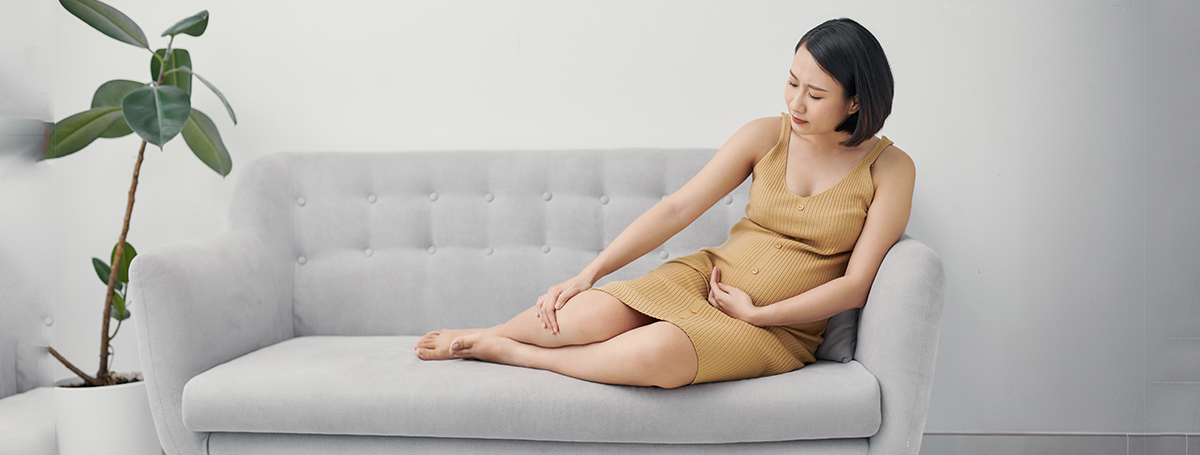
Swollen legs during pregnancy is one of the most common discomforts experienced by expecting mothers, especially during the second and third trimesters. Understanding why swollen legs during pregnancy occur and how to manage them can make your pregnancy journey much more comfortable.
Are your shoes feeling tighter? Are your legs swelling and feeling heavier as the day goes on? Don’t worry, these signs are just another part of pregnancy.
Swollen legs during pregnancy are something many moms-to-be experience. Those swollen feet can be frustrating and uncomfortable, but, it’s a normal part of pregnancy. Swelling feet during pregnancy indicates your body is working hard to support both you and your baby.
The swelling might appear in your legs, feet, or even hands, especially as your pregnancy progresses. While it’s natural, it can still leave you feeling uneasy. We want to share some helpful tips and insights to make this stage a bit more manageable.
In this blog, we’ll explore why a swollen foot in pregnancy happens and how you can find some relief with natural remedies and simple lifestyle changes.
Key Takeaways
- Your body is going through significant changes in this journey, and swelling, especially in the legs and feet, is a result of those changes.
- Dealing with swollen legs during pregnancy can be challenging, but there are simple ways to ease the discomfort:.
- Swelling during pregnancy is completely normal and can feel a bit overwhelming, but it’s just your body adjusting to the changes.
- Dealing with swollen legs during pregnancy can feel draining, but there are natural remedies and lifestyle adjustments that can make a difference.
- It’s important to remember that while swelling feet during pregnancy can be uncomfortable, it’s a normal part of pregnancy.
What Are the Causes of Swollen Legs During Pregnancy
Your body is going through significant changes in this journey, and swelling, especially in the legs and feet, is a result of those changes. Here’s what’s happening in your body that’s resulting in swollen legs during pregnancy:
- Increased Blood Flow: During pregnancy, your body produces extra blood and fluids to support your baby’s growth, leading to swollen legs and feet.
- Fluid Retention: Swelling feet during pregnancy indicates your body is retaining blood plasma and lymphatic fluids, which helps soften your tissues and prepare you for labour.
- Pressure on Veins: As your baby grows, the uterus puts pressure on the veins in your legs, slowing circulation and causing a swollen foot in pregnancy.
- Hormonal Changes: The hormone relaxin loosens your joints and ligaments, which can lead to swollen legs during pregnancy.
Effective Ways to Reduce Swelling
Dealing with swollen legs during pregnancy can be challenging, but there are simple ways to ease the discomfort:
- Elevate Your Feet: Whenever you sit, prop your legs up on a pillow or stool. This simple trick reduces swollen legs during pregnancy by letting blood plasma and lymphatic fluid drain back toward your heart.
- Stay Hydrated: Drinking water helps flush out excess blood plasma and lymphatic fluids. It may seem odd, but staying hydrated actually helps reduce swelling.
- Wear Comfortable Shoes: Ditch the tight shoes and opt for something roomy to reduce discomfort and avoid worsening a swollen foot in pregnancy.
- Avoid Standing for Long: Take breaks to sit or walk around if you’ve been on your feet too much. Constant standing can worsen the swelling.
- Stay Active: Gentle exercises like walking, swimming, or prenatal yoga improve circulation and reduce fluid buildup. Even a short stroll each day can make a difference for swollen feet during pregnancy.
Is Swelling During Pregnancy Normal
Swelling during pregnancy is completely normal and can feel a bit overwhelming, but it’s just your body adjusting to the changes. Here’s why it happens:
- Gravity at Work: As your belly grows, gravity causes blood plasma and lymphatic fluid to settle in your lower extremities. Thus, swelling feet during pregnancy indicates nothing unusual or alarming.
- Hot Weather: Swelling worsens in the summer months, as heat tends to increase fluid retention and make a swollen foot in pregnancy more noticeable.
- Standing for Long Periods: Being on your feet for too long can make swelling worse, so allow yourself to rest as and when possible.
What Are Natural Remedies and Lifestyle Adjustments
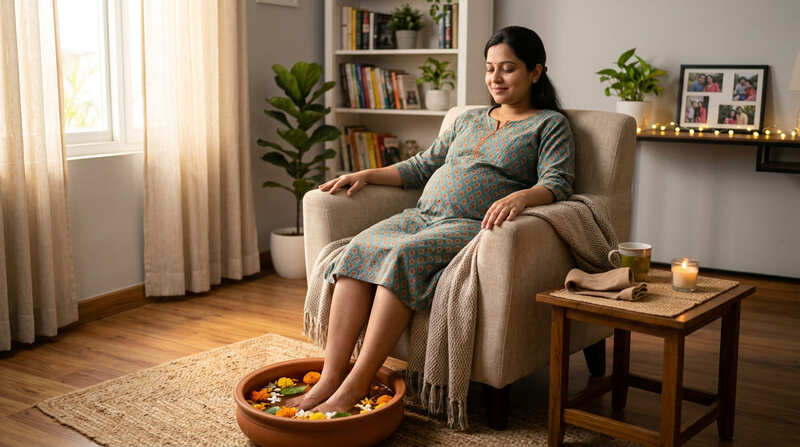
Dealing with swollen legs during pregnancy can feel draining, but there are natural remedies and lifestyle adjustments that can make a difference.
- Wear Compression Socks: They’re not the most fashionable, but they work wonders. Compression socks help prevent swelling by improving blood flow and stopping fluid from pooling in your legs, reducing the swollen foot in pregnancy.
- Sleep on Your Side: This might sound odd, but lying on your left side takes the pressure off your major veins and allows better circulation, helping reduce swelling, especially at night.
- Try Epsom Salt Bath: A warm bath with Epsom salts can soothe your tired, swollen feet and help reduce water retention. It’s also a perfect way to unwind and give yourself some much-needed relaxation.
When Does Leg Swelling Start in Pregnancy?
Mild ankle puffiness can begin in the second trimester (weeks 13–27), usually noticed by week 20 as blood volume increases by nearly 50%. Most women see significant swelling in the third trimester, especially after week 28. Swelling is usually worst in the evening, after long days standing or sitting, and during summer months when heat causes fluid retention. The puffiness typically resolves within a week or two after delivery as your body releases stored fluid.
Foods That Reduce Pregnancy Swelling
Build meals around natural diuretic foods: cucumber, watermelon, celery, and pineapple. Add potassium-rich foods like banana, sweet potato, spinach, and avocado — they balance sodium and reduce water retention. Magnesium sources (almonds, pumpkin seeds, dark chocolate in moderation) ease muscle tightness. Stay hydrated with 2.5–3 litres of water daily; counterintuitively, drinking more reduces swelling. Cut back on processed foods, restaurant meals, and packaged snacks — they’re often high in hidden sodium.
Best Sleeping Position for Swollen Legs
Sleep on your left side with two pillows propping up your legs slightly above heart level. This position takes pressure off the inferior vena cava (the major vein returning blood to your heart) and improves circulation back from the legs. Add a pillow between your knees for hip alignment. Avoid back-sleeping after week 20 — it worsens swelling and can cause dizziness. A wedge pillow under your hips also helps by elevating the lower body.
Daily Habits to Prevent Swelling
Take a 5-minute walk every hour if you sit at a desk all day. Avoid crossing your legs while sitting — it restricts blood flow. Wear comfortable shoes with good arch support; skip heels and tight straps. Try compression stockings (15–20 mmHg) — put them on first thing in the morning before swelling starts. Cool foot soaks for 15 minutes before bed help bring down end-of-day puffiness. Keep your bedroom cool at night to reduce overnight fluid retention.
Simple Exercises for Better Circulation
Ankle rotations: while seated, rotate each foot 10 times in both directions. Calf pumps: sit and flex feet up and down, 20 reps each leg. Wall calf stretches: stand arm’s length from wall, one leg back, hold 30 seconds. Prenatal swimming or water aerobics is excellent — water pressure naturally reduces swelling. A daily 20–30 minute walk on flat ground keeps circulation moving. Always stop if you feel dizzy, breathless, or in pain.
Warning Signs You Should Not Ignore
Call your doctor immediately if swelling appears suddenly, especially in your face or hands; one leg swells noticeably more than the other (possible blood clot or DVT); swelling comes with severe headache, blurred vision, or upper-right belly pain (signs of preeclampsia); you have a fever with leg pain; or your urine output drops dramatically. These can signal serious conditions that need urgent evaluation, even if you feel otherwise okay.
Postpartum Swelling: What to Expect
Many new moms are surprised that swelling can actually worsen for a few days after delivery as the body releases retained fluid through urine and sweat. This is normal and usually resolves within 1–2 weeks. Continue elevating legs, staying hydrated, and walking gently. Compression stockings still help during this period. If swelling persists beyond 3 weeks, gets worse, or appears alongside chest pain or shortness of breath, see your doctor — postpartum DVT is rare but serious.
Conclusion
It’s important to remember that while swelling feet during pregnancy can be uncomfortable, it’s a normal part of pregnancy. However, listen to your body – if something doesn’t feel right, never hesitate to reach out to your doctor.
Take comfort in knowing that this swelling is temporary, and once your baby arrives, your body will gradually return to its normal state. Until then, be kind to yourself, take breaks when needed, and remember that every small discomfort is a step closer to meeting the little bundle of joy you’ve been waiting for.
Expert Resources
For more information about swollen legs during pregnancy, visit the American College of Obstetricians and Gynecologists (ACOG) and the World Health Organization (WHO) for trusted maternal health guidance.
Related Articles
- Pregnancy Precautions: A Comprehensive Guide
- Pelvic Floor Exercises After Delivery
- Stretch Marks During Pregnancy
References & Sources
You May Also Like




Frequently Asked Questions
Do swollen feet mean labour is near?
Not necessarily. Swollen legs during pregnancy don’t always signal labour, but it’s common as you approach the end of the tenure.
When should you be concerned about swelling during pregnancy?
You should be careful if swelling is sudden, painful, or affects only one leg. This could indicate a more serious issue like preeclampsia (high blood pressure and signs of organ damage) or a blood clot.
At what month of pregnancy do your feet swell?
Swollen feet in pregnancy typically start in the second or third trimester as your body retains more fluid and circulation slows down, especially in the legs.
What can I drink to reduce swelling in my feet?
Drinking plenty of water helps reduce swelling in your feet during pregnancy. Herbal teas like dandelion or ginger may also help, but always check with your healthcare provider before trying something new.